Our Story

Echoes of Langkasuka

Langkasuka was one of Southeast Asia’s earliest and most influential Malay kingdoms, existing from around the 2nd to 15th century CE. Centered near today’s Pattani (southern Thailand) and extending into northern Malaysia including Terengganu, it was strategically located along major maritime trade routes connecting India, China, and the archipelago.

Archaeological findings and ancient records describe Langkasuka as a cosmopolitan, multi-ethnic port state. Its rulers and society blended Malay customs with Indian Hindu-Buddhist traditions, Chinese influences, and, from the 13th century onward, Islamic beliefs and practices. The kingdom’s architecture featured distinctive rooflines, woodcarvings, and building techniques (such as pasak & tanggam joinery) that are still visible in Terengganu’s heritage houses today.

By the 14th–15th centuries, Langkasuka’s influence declined as trade shifted to emerging ports like Malacca and Pattani, while powerful empires such as Srivijaya and Majapahit overshadowed it. Like many early kingdoms, internal power struggles also made centralized governance difficult, contributing to its decline.
Land of Palaces

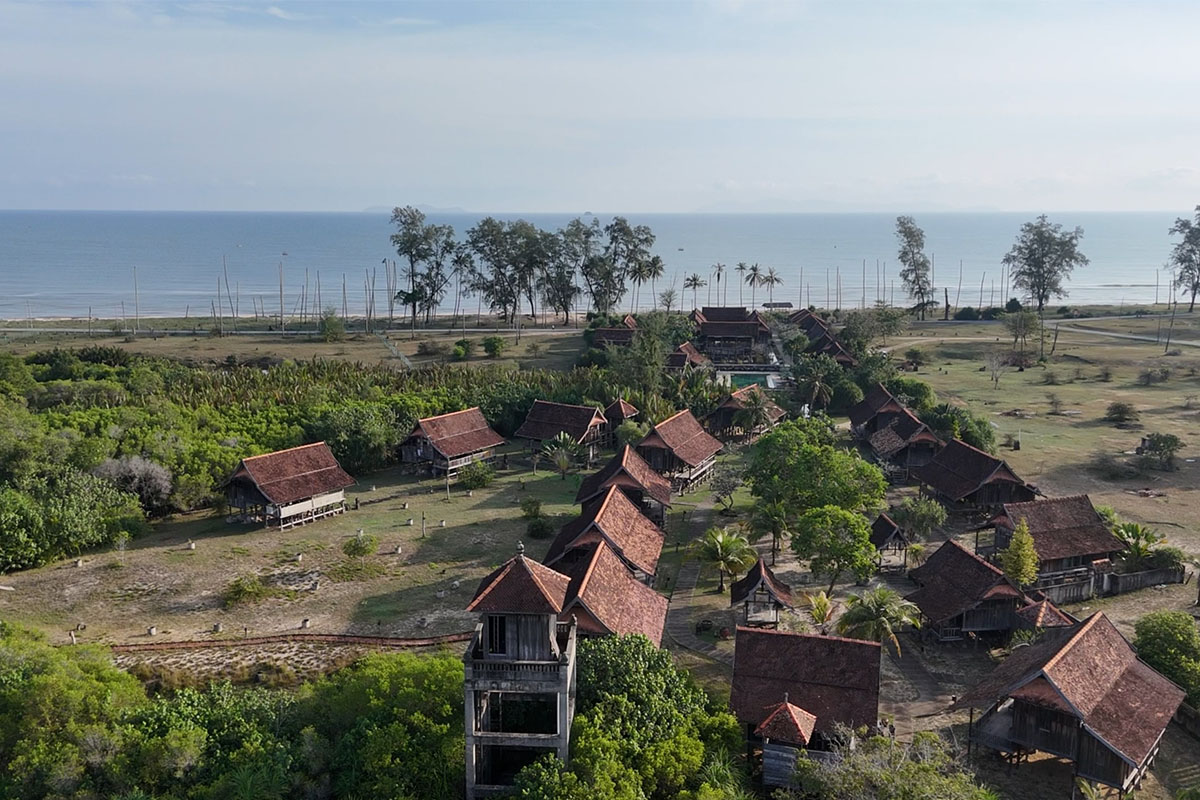
Terrapuri Heritage Resort is a landmark restoration and conservation project located on the scenic shores of Setiu, Terengganu, Malaysia. Our name, “Terrapuri,” combines the Latin “Terra” (land) and Sanskrit “Puri” (palace). The heart of our village is a collection of 29 meticulously restored Terengganu heritage houses, each aged between 100 and 250 years. The design of the village resort is inspired by the palace grounds of 17th-century Terengganu, featuring interconnected courtyards, communal gardens, and panoramic views. This palace design itself is rooted in the traditions of the ancient Langkasuka kingdom, whose architectural innovations such as tiered roofs, raised floors, and intricate woodcarvings became the foundation for later royal residences in Terengganu.
 
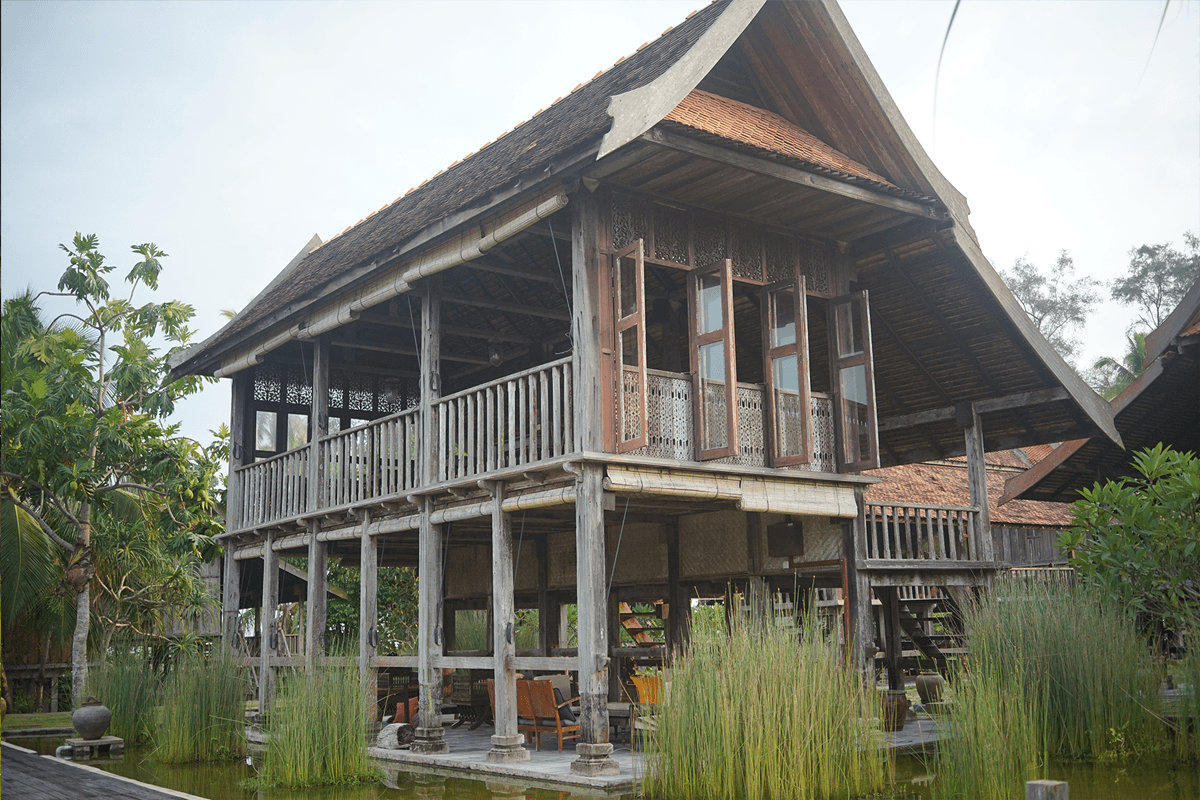
Every villa showcases traditional construction principles, such as raised floors on timber stilts for natural ventilation and flood protection, robust cengal hardwood frames ensuring durability, and intricate woodcarvings with floral and geometric motifs reflecting the local artistic legacy. By reviving these classic forms and spatial layouts, Terrapuri offers guests a direct link to the region’s lost kingdom heritage.

A Mission of Conservation and Restoration

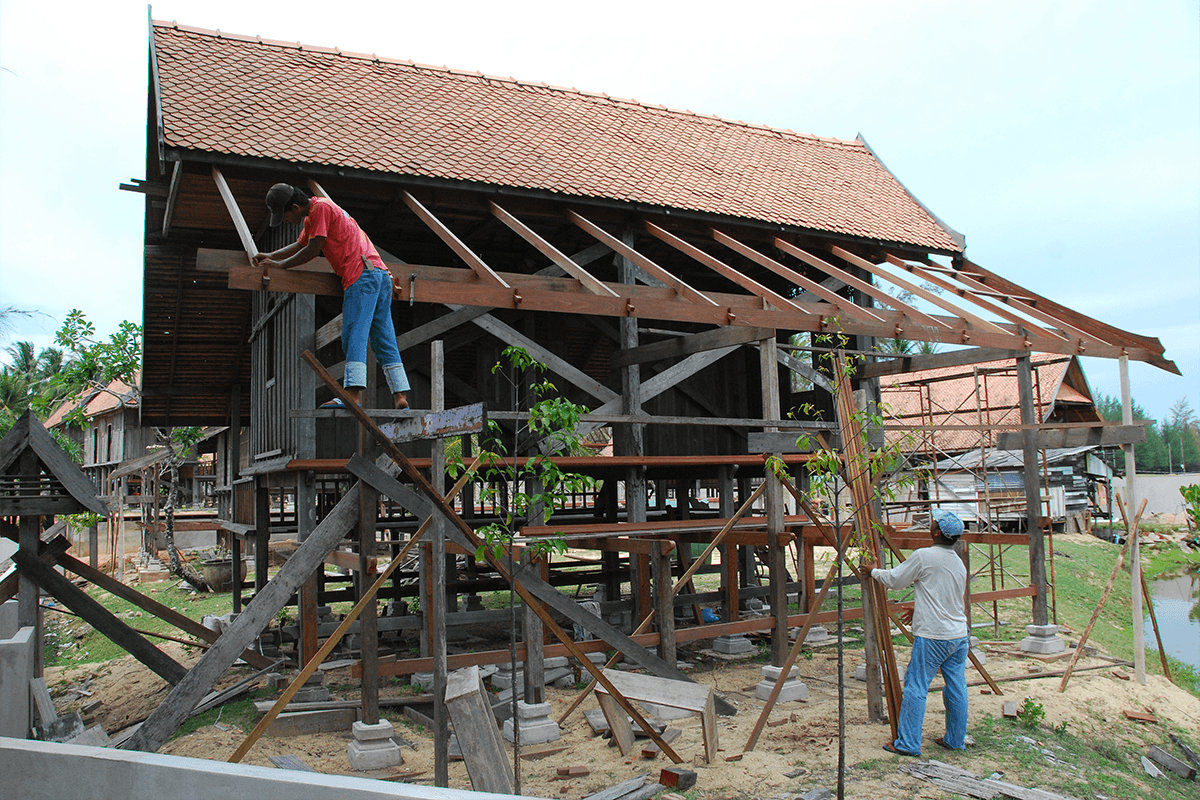
Terrapuri’s founding vision was to rescue and preserve Terengganu’s endangered architectural treasures, many of which faced demolition or decay due to rapid modernization and shifting lifestyles. Since the early 2000s, our team has traveled across villages and districts in search of classic Malay houses many built using the ingenious pasak & tanggam (wooden peg and wedge) joinery, a nail-free system designed for resilience in humid tropical climates. Each house was carefully dismantled, transported, and painstakingly reconstructed at Terrapuri, following traditional techniques to maintain its original character and structural integrity.
 
Our restoration work goes beyond the physical buildings; it is also about honoring the skills of local artisans, preserving the historical wisdom of home-building, and safeguarding the intangible cultural heritage passed down through generations. Many of our villas once belonged to aristocrats, religious teachers, or prominent village leaders, and their stories are documented through photographs, artifacts, and oral histories available in our gallery and reading room. By staying at Terrapuri, guests help support ongoing conservation efforts and contribute to the living legacy of Terengganu’s culture for future generations.

Living the Legacy

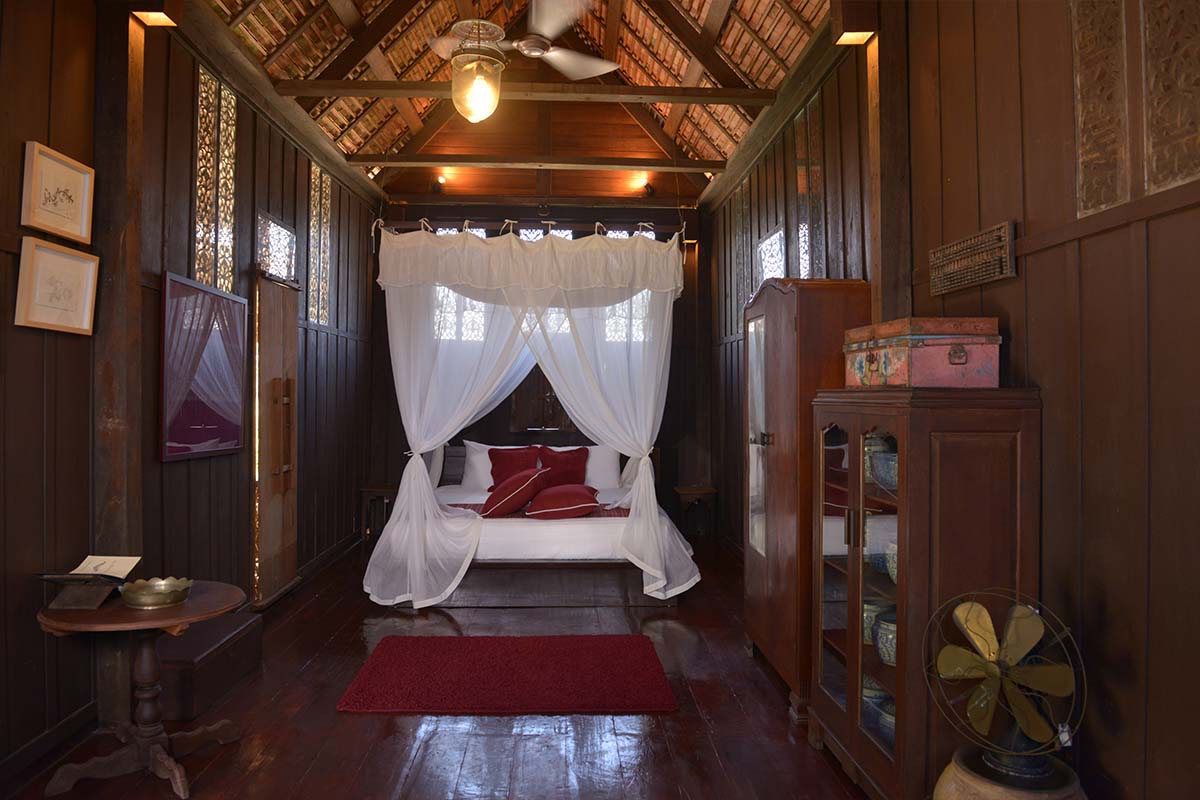
A stay at Terrapuri is a journey into history, comfort, and natural beauty. Each villa is thoughtfully equipped with modern amenities such as air conditioning, ceiling fans, spacious bathrooms featuring wooden bathtubs and stone wall showers, private verandas (selasar), and antique furnishings that blend past and present. Beyond your villa, the resort offers an array of facilities: relax in our infinity pool overlooking the wetlands, unwind at the beachfront hut with stunning island views, or enjoy tranquil moments in the reading room housed in a century-old timber palace. Throughout the resort, guests will discover a remarkable collection of ancient artifacts and traditional objects thoughtfully placed across the grounds and within the villas. These artifacts include weathered boat prow carvings, kentong slit drums, hand-looming tools, carved birdcages, Wayang Kulit puppets, congkak boards, woven mats, brassware, and much more. Our Teluk Pasu Gallery further showcases rare items and art from the ancient Langkasuka era, offering deeper insights into the region’s history. Guests can browse for unique souvenirs in our heritage shop, join guided nature excursions, or embark on curated heritage tours that reveal the stories behind many of these relics. Complementing these experiences, our Sesayap Courtyard Garden provides a Malay palace-style dining venue, where guests savor authentic Terengganu cuisine prepared with fresh local ingredients, connecting culinary tradition with historic ambiance.

“Terrapuri Heritage Village has been my lifelong dream, a passion I dedicated 18 years to. My vision was clear: to collect and preserve these endangered, century-old houses, ensuring they live on not as museum pieces, but as functional, luxurious accommodations. It stems from a deep commitment to our cultural heritage, investing to create a place where every guest can truly experience the spirit of Terengganu’s rich past, a living legacy for generations to cherish.”

Alex Lee Yun Ping

Founder